
Kubs Lalchandani

Our Endorsement
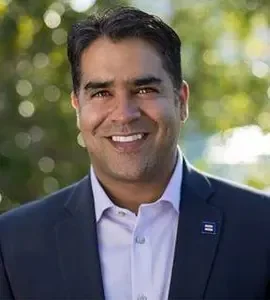
Boulder Progressives is proud to endorse Kubs Lalchandani for CU Regent in Congressional District 2. Kubs knows firsthand what it means to navigate institutions that weren't built with you in mind. As a person of color who grew up right here in our community, he brings a perspective to this race that is both personal and powerful. He is not afraid to ruffle feathers, fight for what's right, and take on the federal government when it comes after CU's students and values.
About Kubs
A technology and healthcare lawyer with nearly two decades of experience, Kubs has built his practice at the intersection of AI, litigation, and institutional strategy — guiding organizations through high-stakes decisions on hiring, budgets, and complex legal disputes. Before founding his specialized law firm, he developed a global career in finance and technology. He also serves as an annual guest lecturer at Cornell University on law, technology, and entrepreneurship.
Boulder is home. Kubs's parents immigrated here in 1979, and he grew up graduating from Fairview High School before heading to Cornell. Still rooted in Boulder, in 2019 he co-founded Treeline Veterinary Cancer Care alongside Dr. Karen Oberthaler, bringing advanced cancer treatments to Colorado's pets.
Running for CU Regent in Congressional District 2, Kubs wants to put his Boulder upbringing, global perspective, and expertise in AI and institutional leadership to work for the university. His priorities: equipping students for an AI-driven economy, improving graduation rates, protecting CU's independence from federal interference, and ensuring underrepresented students have a meaningful voice in how the university is run.
"CU must comply with the law, but it cannot surrender intellectual independence to shifting bullies."
Positions at a Glance
Q&A with Kubs Lalchandani
How would you characterize the threats to higher education and what is your theory of change?
Higher education is facing a convergence of historic pressures — financial, political, and technological — that together threaten the core mission of the university. Affordability is the most immediate threat: when costs rise faster than family incomes, higher education only supports the privileged and removes the possibility of social mobility for less advantaged students. Federal funding instability and political interference present real risks: when research dollars are pulled for political leverage, it undermines academic freedom and long-term planning. And AI will transform the workforce in ways that challenge traditional models of instruction.
My theory of change: return to core mission, recommit to affordability as a public good, defend institutional independence through litigation and coalition-building when necessary, diversify funding sources to reduce overreliance on any single stream, and adapt intelligently to AI by doubling down on what machines cannot replicate — critical thinking, ethical reasoning, creativity, and civic leadership. Public universities are foundational democratic institutions. They should be accessible, mission-driven, financially responsible, and fiercely independent.
What enemies should CU administrators and regents have the courage to make?
There are several constituencies CU leaders must be willing to challenge. First, any federal actor that attempts to use funding as leverage to dictate ideology or constrain academic freedom. CU must comply with the law, but it cannot surrender intellectual independence to shifting politics — and when government overreach threatens research, teaching, or viewpoint diversity, regents should be prepared to litigate, build coalitions with peer institutions, and defend CU's autonomy.
Second, powerful boosters or donors who conflate financial support with governance authority. No donor, corporation, or interest group should shape curriculum, hiring, or research agendas in ways that compromise CU's core mission.
Third, internal administrative expansion that drives up costs without advancing instruction or research. If CU faces financial strain, the burden should fall first on administrative excess — not on faculty, frontline staff, or students.
How would you navigate CU's censorship of research proposals and banned words?
Academic freedom is the foundation of any great public university. When CU's President and General Counsel directed removal of public health reports from the College of Nursing and imposed lists of banned words, they crossed a line from stewardship into interference. Science cannot advance if political or reputational considerations dictate which questions may be asked, which words may be used, or which findings may be published.
Competitive grant proposals — whether to state, federal, or private funders — must be evaluated on scientific merit and legal compliance, not on whether they align with the politics of the moment. When elected, I would insist on transparent policies that reaffirm faculty control over research and teaching, establish clear guardrails against viewpoint-based censorship, and ensure that any legal compliance review is narrowly tailored and content-neutral.
What is your perspective on collective bargaining at CU?
I support the right of CU employees to organize and engage in collective bargaining. Faculty and staff are the backbone of the University, and they deserve a meaningful voice in working conditions, compensation, and academic freedom. If employees choose to unionize, the process must result in binding agreements — not just shared governance — and as Regent I will support good-faith negotiations and enforceable contracts that respect workers' rights and strengthen CU's core academic mission.
What is your view on Flock cameras and unauthorized surveillance on campus?
In August 2025, the ACLU concluded that Flock audit logs in Denver were searched more than 1,400 times for ICE since June 2024. That is exactly why CU should not work with Flock. Any electronic monitoring of students, faculty, or staff without explicit permission should be prohibited.
What protocols should CU have if ICE comes to campus or student housing?
CU should have a clear, written protocol if ICE attempts to access campus or student housing: require a valid judicial warrant, immediately notify campus counsel and affected individuals, and strictly enforce constitutional protections. As one of very few leaders from a minority background in CU's orbit, I understand the real fear that aggressive immigration enforcement creates in our community. I would also ensure that CU has legal briefs prepared in advance so it can seek injunctive relief immediately if ICE presents on campus.
What are your thoughts on AI in higher education and the role of shared governance?
AI is a tool. Like the internet, calculators, or search engines before it, AI can either enhance education or erode it, depending on how it is implemented. The central purpose of higher education is not content delivery — it is cultivating critical thinking, intellectual discipline, creativity, ethical reasoning, and the capacity to grapple with complexity. Our responsibility is not to shield students from AI, nor bow to it, but to teach students how to use it thoughtfully, transparently, and responsibly.
Faculty must lead decisions about how AI is integrated into teaching and research. Shared governance exists precisely to ensure that academic priorities, pedagogical intent, and disciplinary expertise guide CU's choices — regents and administrators should not bypass faculty expertise or sign transformative technology contracts without meaningful consultation. The right question is not whether AI belongs in higher education. It is how we preserve the core mission of higher education with AI in the world.